CAMILLE SAINT-SAËNS – Odelette, Op. 162 (1920)
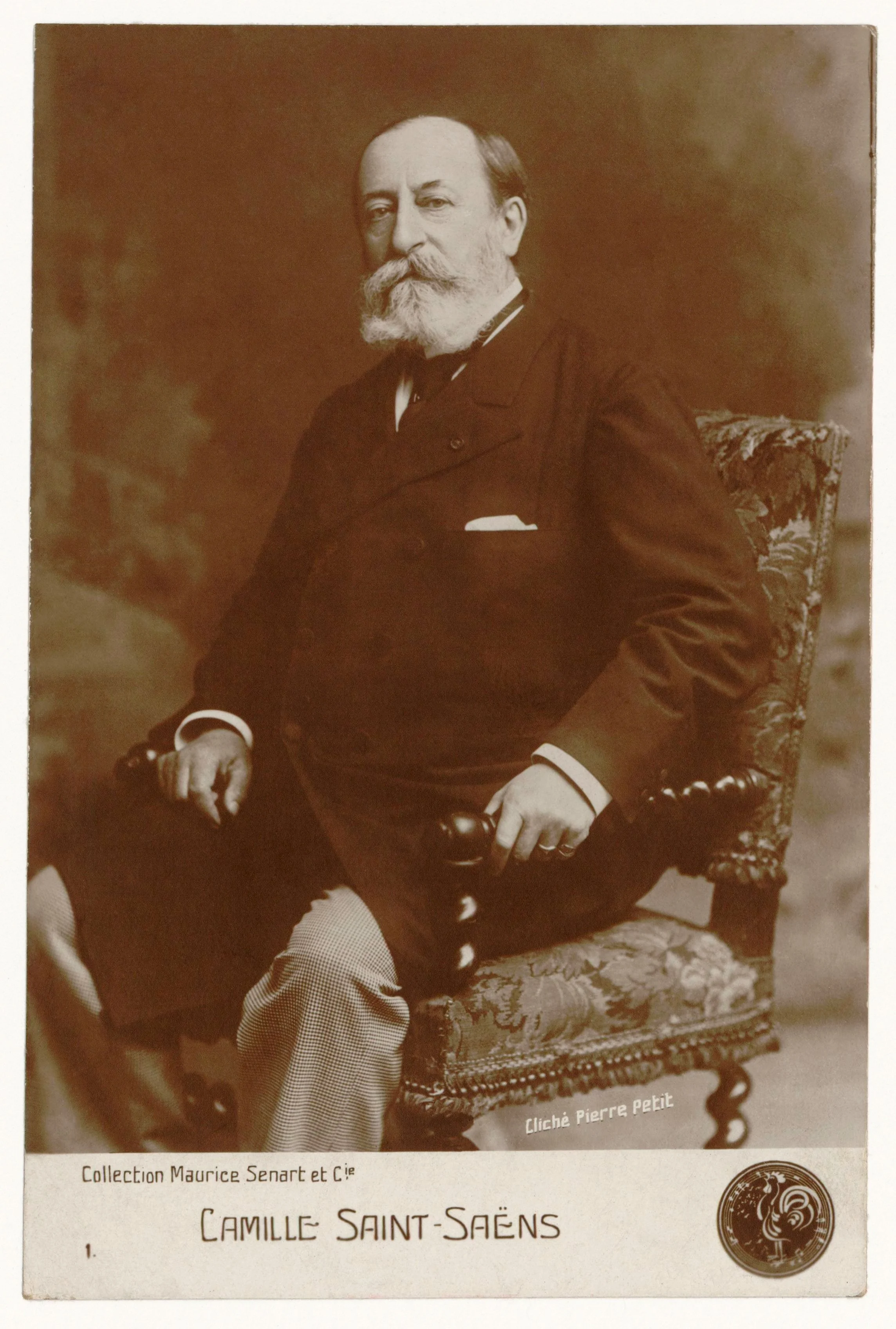
Saint-Saëns was renowned both as a composer of sacred and theatrical works and as a virtuoso pianist and organist. A child prodigy, he gave his début piano performance at the Pleyel Salon, a venue favoured by many great pianist-composers, including Chopin. Afterwards, leading critics praised his remarkable talent and foresaw a brilliant future for him, with some even drawing comparisons to Mozart. Encouraged by this acclaim, Saint-Saëns pursued further study, attending composition classes taught by Halévy at the Paris Conservatoire as an auditeur for a year. Over the course of his career, he contributed to every nineteenth-century musical genre. His keen interest in earlier music also led him to revive several seventeenth-century French dance forms, including the bourrée, gavotte, and menuet.
With his eclectic musical tastes, Saint-Saëns was less concerned with creating radically new styles, and his musical language remained fundamentally conservative. Although he was one of the first to appreciate Wagner, he later became one of Wagner’s sharpest critics, defending the French musical tradition against what he saw as overwhelming Wagnerian influence. Nevertheless, Violin Sonata No. 2 in Eb, Op. 102 (1896) marks the beginning of a stylistic change evident in many of Saint-Saëns’ later works. His writing is more austere: piano textures become lighter and more linear, while orchestral sonorities, particularly those involving harp and woodwinds, are increasingly transparent. This delicate treatment of sonority is evident in Odelette, Op. 162, especially in the flute part. Alongside these textural changes, more remote harmonic progressions and modal changes are explored.
Saint-Saëns titled the work Odelette, a term not previously used in music. The title evokes the secular ode, a Renaissance poetic form written to honour a person or celebrate an occasion. To pay homage to this literary inspiration, this work incorporates features suggestive of Renaissance verse, including trochaic rhythmic patterns and strophic breaks. Dedicated to François Galliard, Odelette was originally written for flute and orchestra. Saint-Saëns later prepared a version for flute and piano.
Odelette possesses an almost concerto-like character in its treatment of the flute. Written in a loose rondo form, this work centres on a principal theme built from a highly ornamented scale. Its recurring appearances are interspersed with expansive hymn-like melodies and brilliant passages of scales and arpeggios. The music moves fluidly through a wide range of keys and moods, showcasing both the expressive and virtuosic capabilities of the flute.