JULES MASSENET – Méditation from Thaïs (1894)
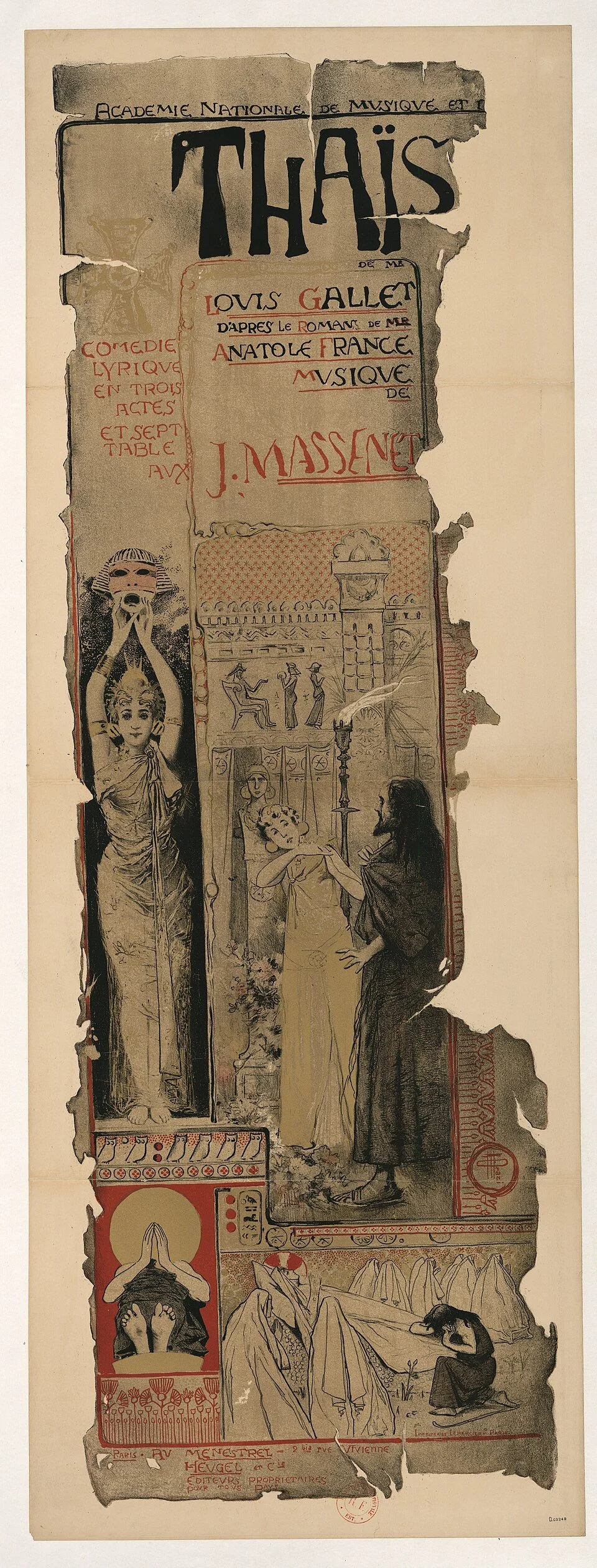
Massenet is most notable for his illustrious career in opera, composing more than thirty works across four decades. As a young musician, he supported himself by working as a timpanist at the Théâtre Lyrique in Paris while studying piano and solfège at the Paris Conservatoire. This experience was crucial, giving him constant exposure to the operatic repertory and helping to develop the theatrical instincts and lyrical style that would later define his music. Among the composers who most influenced him were Gounod and Thomas, whose emphasis on expressive melodies and simple harmonies can also be heard in Méditation.
Composed in the early 1890s, Thaïs was written for the celebrated soprano Sybil Sanderson and based on Anatole France’s novel of the same name. Set in Coptic Egypt, Thaïs reflects the nineteenth-century Parisian fascination with exotic and historical settings, which Massenet evoked throughout his operas with remarkable theatrical colour and atmosphere. The opera centres on the monk Athanaël, who seeks to bring the Egyptian courtesan Thaïs to the Christian faith. As the drama unfolds, themes of religious devotion, sensual desire, and inner conflict become increasingly intertwined.
Méditation, originally scored for solo violin with delicate harp accompaniment, serves as the entr’acte between Acts II and III. In Act II, Thaïs begins to question the emptiness of her luxurious and worldly life. Athanaël urges her to abandon earthly pleasures and promises eternal life through faith in God. Although Thaïs appears momentarily transformed by his words, the arrival of her old lover Nicias rekindles her uncertainty. Torn between spiritual awakening and sensual attachment, she breaks down emotionally after Athanaël departs. Méditation portrays Thaïs alone with her thoughts, reflecting on her past with regret before ultimately deciding in Act III to renounce her former life.
One of the most celebrated lyrical solos in the violin repertoire, Méditation captures Thaïs’ introspection and gradual spiritual transformation with remarkable tenderness and serenity. Its popularity has led to numerous transcriptions for different instruments.